Learn how your bedroom aesthetic influences sleep quality and discover practical design fixes to create a calming, comfortable space for better rest.

Your bedroom aesthetic is a nervous-system prompt that tells your body “stay alert” or “power down.” If the room feels bright, busy, or unfinished, you can be exhausted and still feel wired. A sleep-friendly bedroom aesthetic isn’t boring design—it’s lower stimulation and clearer cues after dark.
High-energy “dopamine decor” is still popular, but it fights sleep when it shows up in the bedroom. The calmer counter-trend—warm minimalism, softer lighting, and sensory comfort—works because it reduces mental effort at night.
Color And Light: The Fastest Way To Tell Your Body It’s Night
Cool whites and sharp contrast can look crisp, but they often feel like daytime. Warm tones and softer edges reduce visual “sparkle,” which helps your brain slow down. If you want one high-impact change, improve your evening lighting first.
Pick A Low-Stimulation Palette
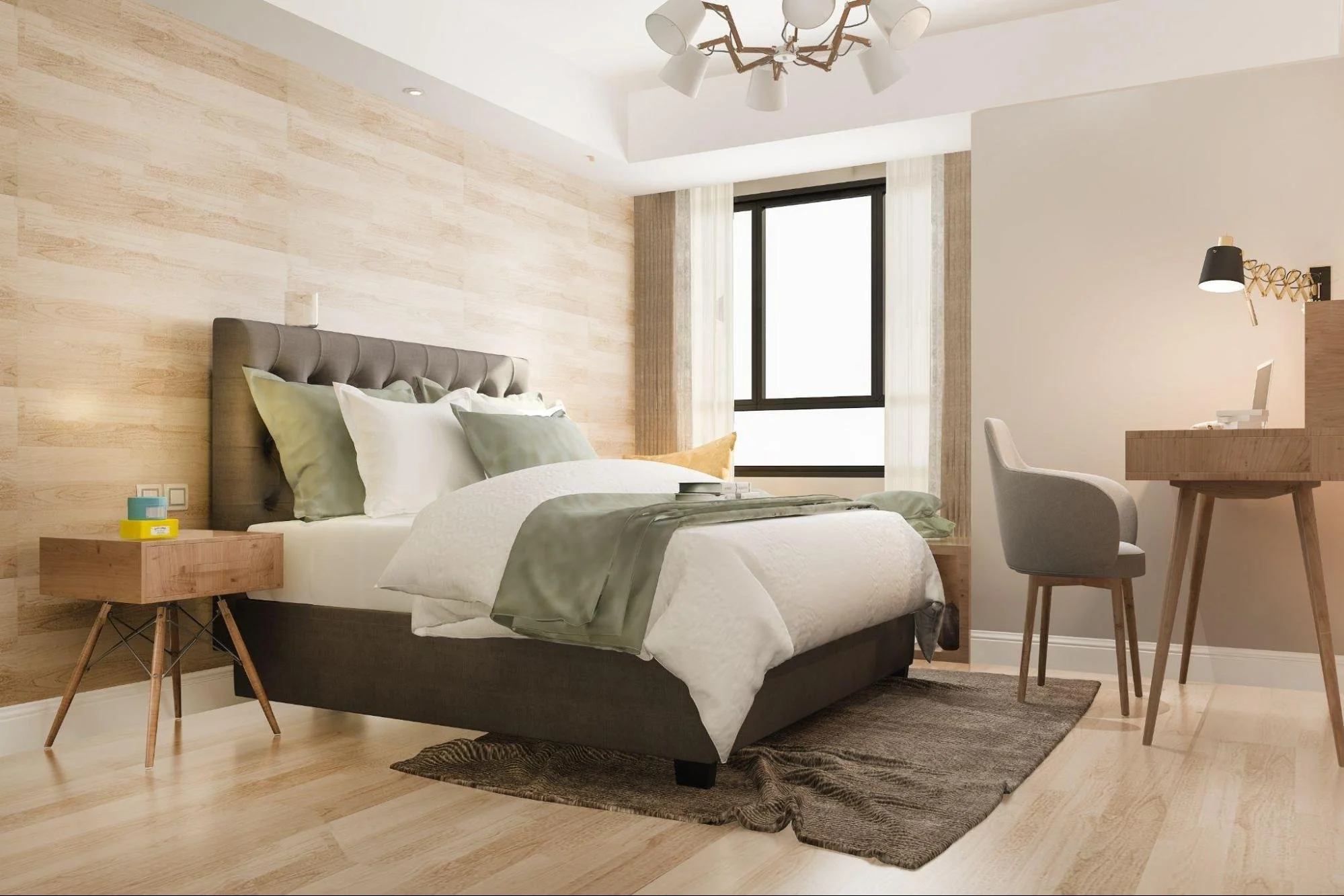
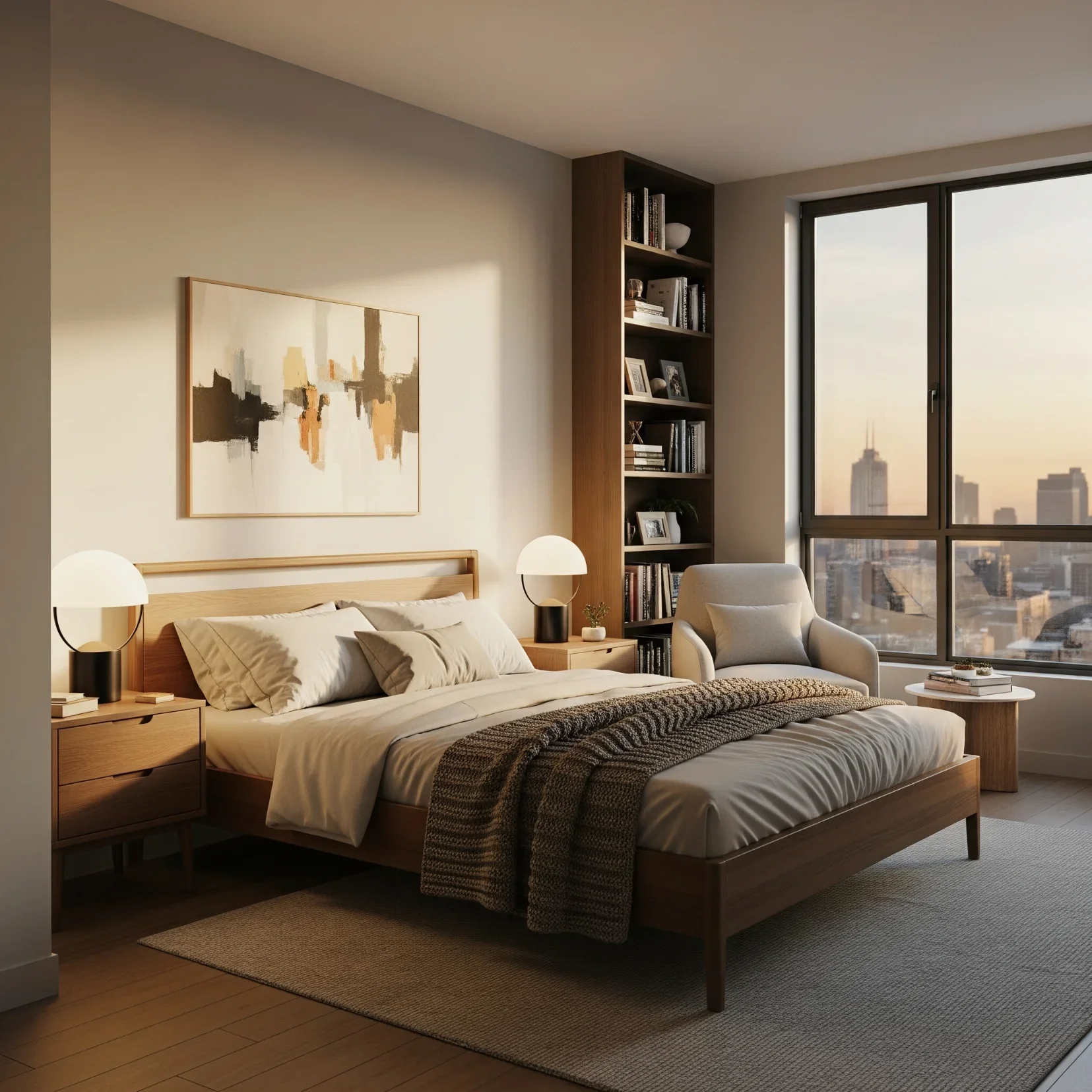
Choose warm neutrals, muted greens, clay tones, or dusty blues that don’t demand attention. Keep contrast gentle by pairing similar tones instead of stark black-and-white. If you love bold color, use it in a small accent that you don’t face from bed.
Create A Repeatable “Sunset” Lighting Setup
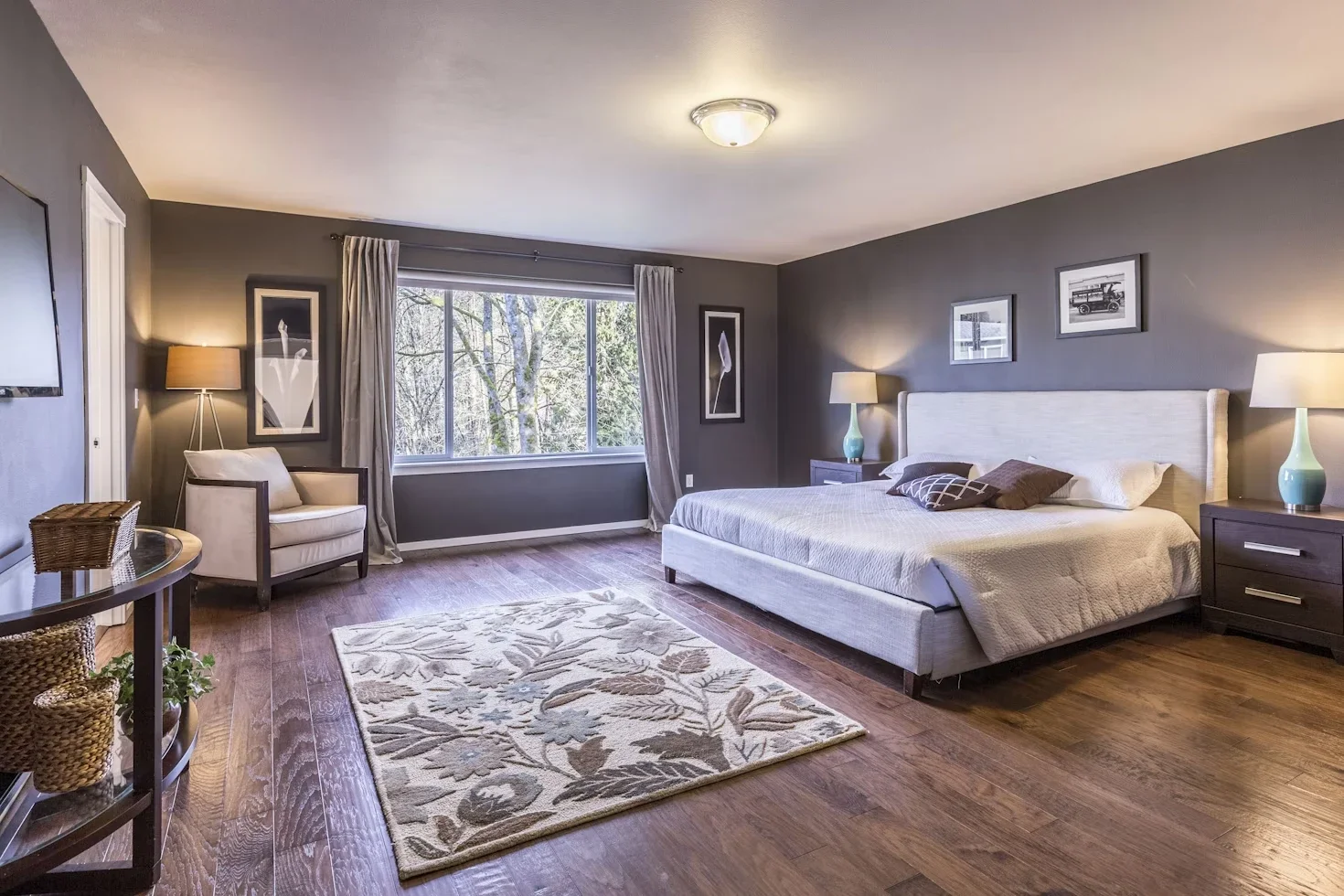
Use lamps instead of a bright overhead light, and aim for warm bulbs with a diffusing shade. Affordable smart bulbs now make a nightly dim-down schedule easy, so the room softens automatically. Put light on both sides of the bed if possible to avoid a single harsh hotspot.
Reduce Glare And Blue-Heavy Hotspots
Mirrors, glossy furniture, and screens can throw reflections right where you rest. Angle mirrors away from lamp glare and choose matte finishes near the bed. If you scroll at night, lower the brightness until it feels almost dull and use a warm display mode.
Sound, Scent, And Air: The Invisible Aesthetic That Wakes You Up
Your brain stays lighter in sleep when your senses keep getting tiny “check this” signals, and if you’re looking up how to wake up easier, this is one of the most common hidden reasons mornings feel rough. Sensory-friendly interiors are useful because they treat comfort as design.
Soften Sound Without Ugly Solutions
Hard floors and bare walls bounce noise and make small sounds feel sharp. Add a rug, heavier curtains, and a soft wall element like fabric art or felt panels. If outside noise fluctuates significantly, steady sound masking can make nights feel more predictable.
Keep Scent Subtle And Predictable
Strong fragrance can become stimulating or irritating after an hour. If you like scent, use one gentle note and keep it away from your pillow. Avoid burning anything right before bed because heat and smoke can be activating.
Treat Air Quality As Part Of The Vibe
Dust and stale air can cause micro-wakeups that feel like “bad sleep” with no clear reason. Keep surfaces easy to wipe, wash bedding often, and reduce dust-catching clutter. Quiet air purifiers blend well beside a dresser instead of near your head.
Clutter And Visual Noise: The Hidden Reason You Don’t Feel Rested
A cluttered room keeps your attention scanning, even when you think you’re relaxing. Piles of laundry and open shelves act like a silent reminder list, which can raise background stress. The goal isn’t perfection—it’s closure, even in what you can see from bed. Your bedroom decor for better sleep should look “done” at night.
Remove One “Unfinished Business” Pile
Pick the most obvious hotspot and give it a lidded basket or a drawer so you can hide it fast. If you have a desk in the bedroom, turn it away from the bed and cover it at night. Your brain relaxes quickly when work signals disappear.
Choose Storage That Resets Quickly
Open storage looks curated, but it’s tough on a busy mind. Closed drawers, baskets, and under-bed bins let you tidy without making it a project. Keep the floor clear because floor clutter reads as a physical risk.
Make Your Nightstand Low-Decision
Limit it to a lamp, water, and one calming item like a book. Hide chargers and small items in a box or tray so they don’t become bedtime clutter. If you need meds or skincare, group them in one container that looks intentional.
Texture, Bedding, And Temperature: Cozy Has To Be Breathable
Comfort is part of aesthetics because your skin and temperature sense are always “on.” A calming bedroom aesthetic works best when it feels soft without feeling heavy. Aim for breathable layers that still look inviting.
Layer For Looks, Not Heat
Use a lighter duvet insert and add texture with a throw at the foot of the bed. Size up covers for draping rather than stacking thick blankets. You get the cozy look without the 3 a.m. sweat-check.
Choose Skin-Friendly Fabrics
Breathable sheets usually feel better at 2 a.m. than clingy fabrics. Percale cotton and linen stay cooler and resist that “stuck” feeling. Keep face-touching fabrics simple and washable, and demote scratchy decorative pillows.
Design A Cooler Sleep Zone
Let air move around the bed by skipping heavy bed skirts and blocking furniture. A quiet fan on low can help, and you can hide it behind a plant or screen to keep the look clean. If dryness wakes you, a small humidifier can be a low-key upgrade.
Personal Style Without Overstimulation: Make It Yours And Still Sleepy
A bedroom that feels generic can be oddly stressful because it doesn’t feel like a safe home base. Familiarity is calming, but novelty is alerting, so your style choices need a filter. Your room can be expressive without being visually loud.
Use Art As A Calming Cue
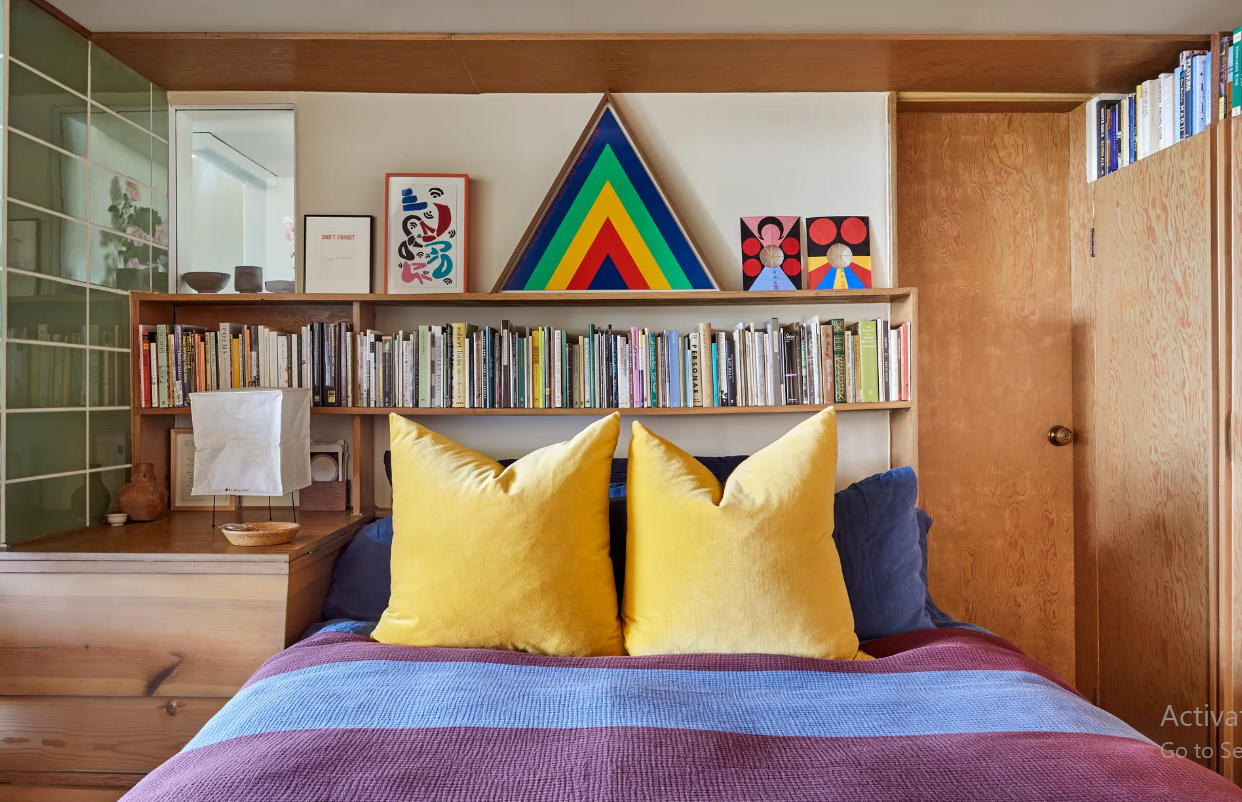
From the bed, avoid intense, busy pieces that pull your attention into stories. One larger, simple artwork often feels calmer than many small frames. Place emotional or high-energy images where you enjoy them in the morning.
Add Natural Elements That Don’t Add Chores
Greenery and natural textures can soften a room and reduce “boxed-in” vibes. Choose low-shedding plants and keep tools out of sight so they don’t become visual clutter. Wood tones, woven baskets, and stone-like ceramics give a similar calm with zero upkeep.
Build A Repeatable Sleep Scene
Set up a nightly reset you can do in two minutes: dim lights, close curtains, clear the floor, and straighten the bed. Repetition lowers mental load, which is why a sleep-friendly bedroom aesthetic often feels simple. If you share the room, agree on a baseline setup so the space stays consistent.
Conclusion
Your bedroom aesthetic affects sleep quality because it controls what your brain has to process at night. Bright light, sharp contrast, clutter, overheating fabrics, inconsistent sound, and stale air all keep your body slightly on guard. Removing a few high-friction signals and adding a few reliable cues can change your sleep faster than chasing “perfect” decor.
Start with warm, dim lighting and one quick clutter reset in your line of sight from bed. Then upgrade comfort with breathable bedding and a cooler sleep zone that still looks cozy. Add one invisible improvement—sound masking or cleaner air—and let it compound over time.
Stay up to date with our latest ideas!