15 Green and Gray Kitchen Ideas for Timeless Style
Discover 15 green and gray kitchen ideas for timeless style that blend natural warmth with sophisticated neutrals beautifully.
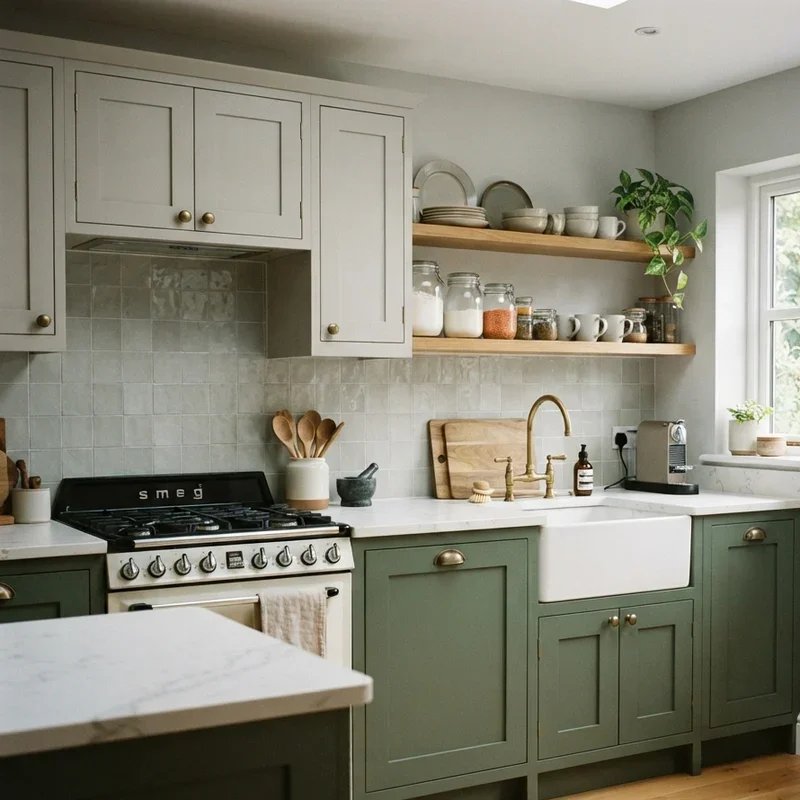
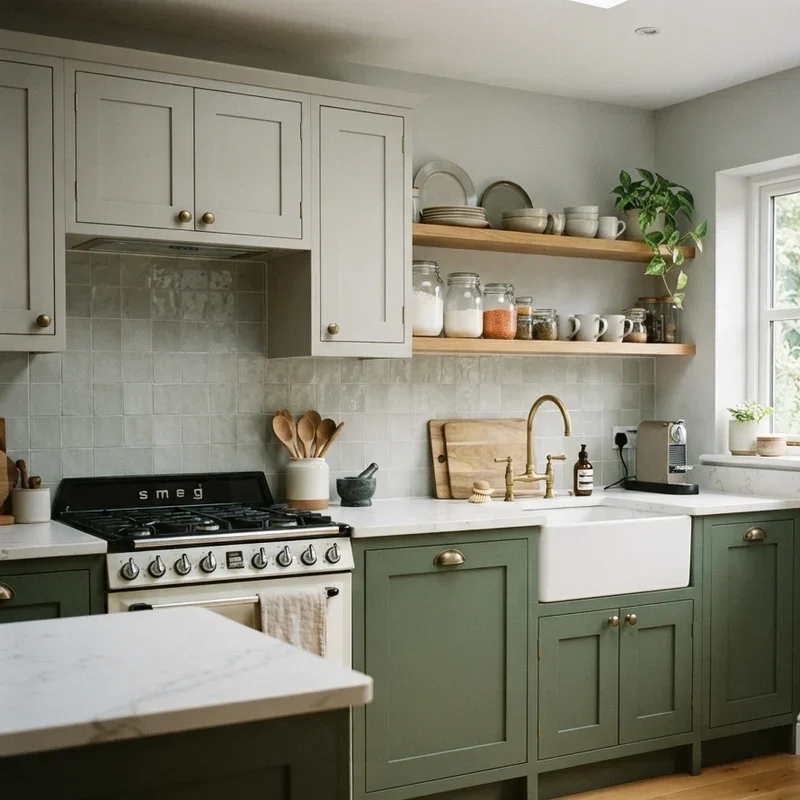
Green and gray together create a kitchen color palette that feels simultaneously grounded in nature and polished with urban sophistication, the organic warmth of green preventing gray's potential coldness while gray's refined neutrality keeps green from feeling overly casual or rustic in spaces that demand enduring design credibility. Have you ever walked into a kitchen that felt both fresh and elegant without being able to identify exactly why the atmosphere struck that perfect balance? Chances are green and gray were quietly working together behind the scenes. Think of this color combination as a conversation between a forest and a city skyline where each voice makes the other more interesting through contrast. These fifteen ideas create kitchens with genuinely timeless appeal.
1. Sage Green Cabinets with Gray Countertops
Sage green cabinets with gray countertops pair the muted, herbal warmth of sage-toned cabinetry with cool gray quartz, granite, or concrete countertop surfaces, creating a kitchen where the organic cabinet color softens the stone's mineral coolness while the gray surface grounds the green's botanical energy into something refined enough for the most design-conscious homeowners. Sage and gray kitchens work like merging a countryside herb garden with a polished gallery floor where nature's palette meets architectural sophistication at the exact intersection where kitchens feel simultaneously warm and elegant without leaning too far in either direction uncomfortably. Choose a sage green with gray undertones creating inherent color harmony between cabinets and counters. Select gray countertops with subtle veining or movement preventing the flat, lifeless appearance that solid uniform gray surfaces sometimes display against the visually active sage cabinet color.
2. Gray Shaker Cabinets with Green Backsplash
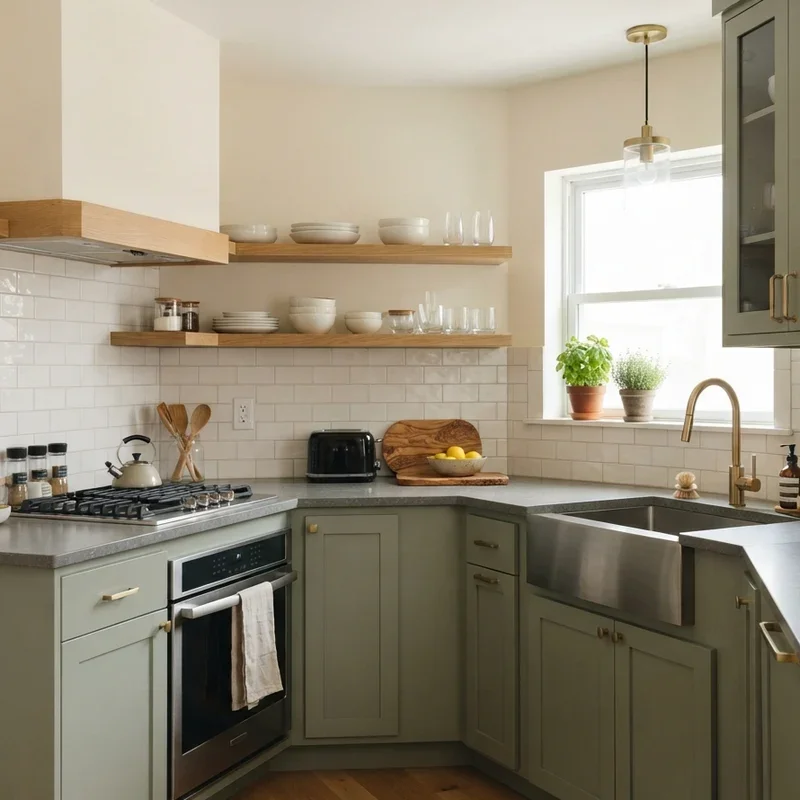
Gray shaker cabinets with a green backsplash install classic shaker-style cabinets in medium or light gray, then introduce green through a ceramic, glass, or zellige tile backsplash in emerald, sage, or hunter green creating a kitchen where the neutral cabinetry provides timeless structure while the green tile delivers the personality and visual energy that gray alone tends to withhold. Green backsplashes behind gray cabinets work like opening a window in a stone wall where the green tile becomes a glimpse of the natural world framed within the architectural neutrality of gray cabinetry, the contained color application preventing the green from overwhelming the kitchen while ensuring it commands adequate visual attention. Choose glossy green tile finishes that reflect light brightening the space between upper and lower gray cabinets. Select handmade zellige tiles with natural color variation creating organic visual texture that mass-produced uniform tiles lack despite sharing the same base color specifications.
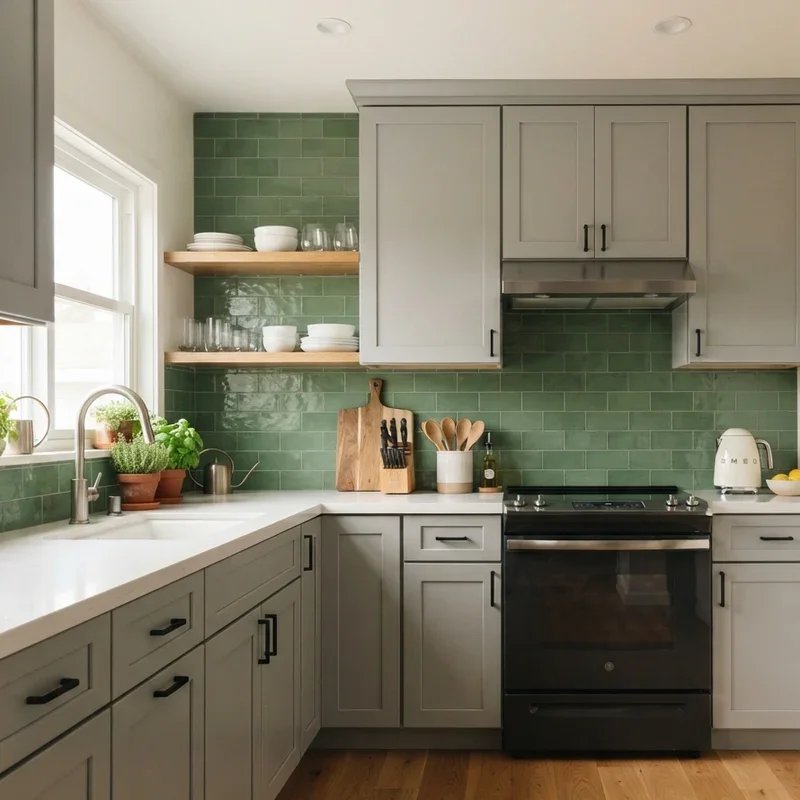
3. Two Tone Green and Gray Cabinet Design
A two tone green and gray cabinet design paints upper cabinets in one color and lower cabinets in the other, typically placing lighter gray above and deeper green below, creating a divided color scheme that adds visual interest and perceived height while allowing both colors to occupy significant visual territory within the same kitchen design. Two tone kitchens work like dressing your kitchen in a coordinated outfit where the upper half and lower half wear different pieces from the same designer collection, the deliberate color separation adding sophisticated dimension that single-color kitchens achieve in uniformity but sacrifice in visual complexity and design personality. Place the darker color on the lower cabinets grounding the room visually. Choose the lighter shade for upper cabinets drawing the eye upward and preventing top-heavy visual weight that dark upper cabinets create in kitchens with standard ceiling heights.
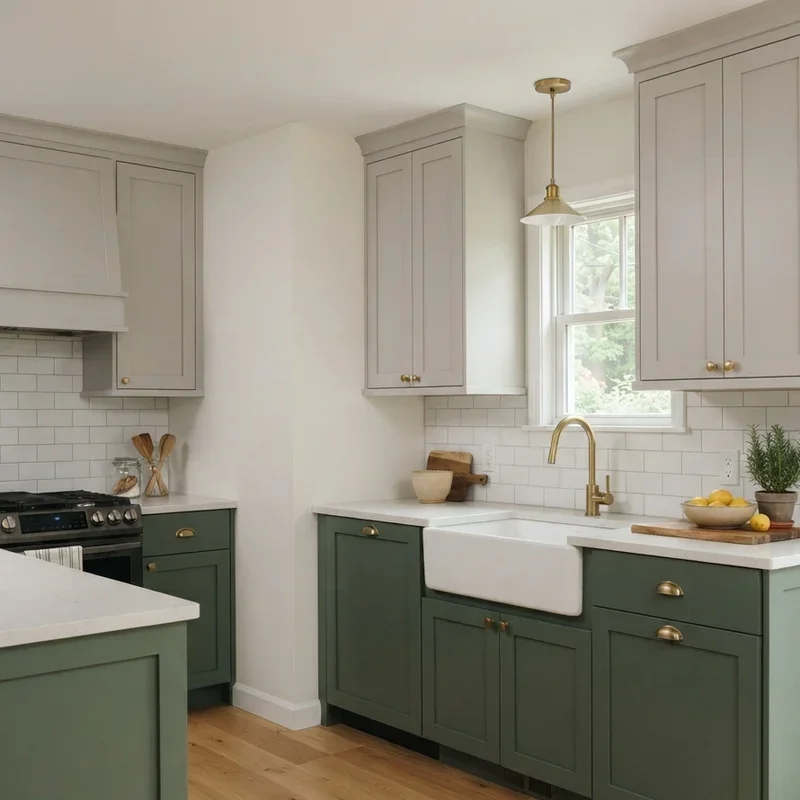
4. Dark Forest Green and Charcoal Moody Kitchen
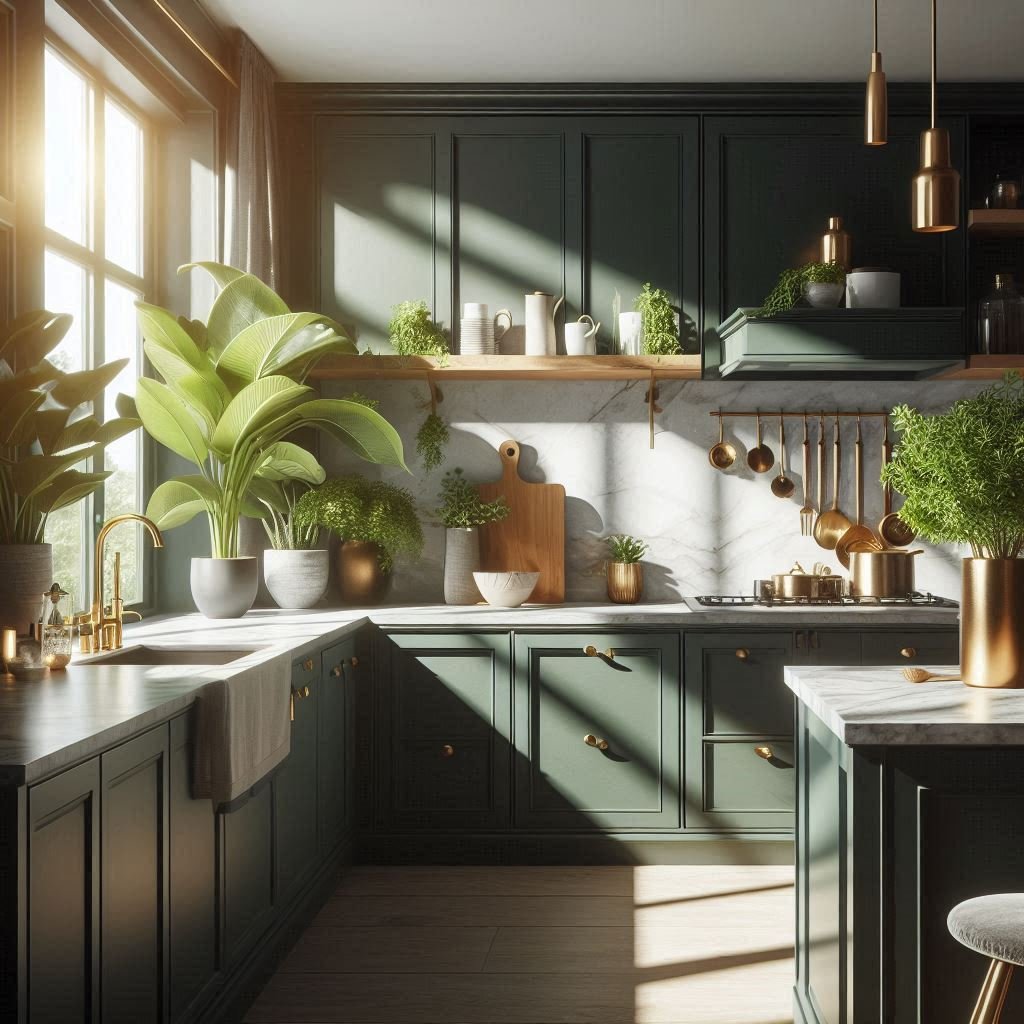
A dark forest green and charcoal moody kitchen combines deep, saturated forest green cabinets with dark charcoal gray walls, countertops, and hardware creating an enveloping, dramatic atmosphere that transforms the kitchen into a richly atmospheric space where the deep colors create intimate warmth rather than the bright, airy openness that lighter kitchen palettes traditionally pursue. Moody green and charcoal kitchens work like stepping inside a shadowed forest clearing where the deep green canopy and gray stone surroundings create an environment so atmospherically immersive that you forget you are standing in a domestic kitchen rather than a woodland lodge whose walls happen to contain modern appliances. Add brass or copper hardware creating warm metallic contrast against the dark color palette. Install under-cabinet lighting illuminating countertop work surfaces preventing the dark surrounding colors from creating inadequate task lighting in food preparation zones.
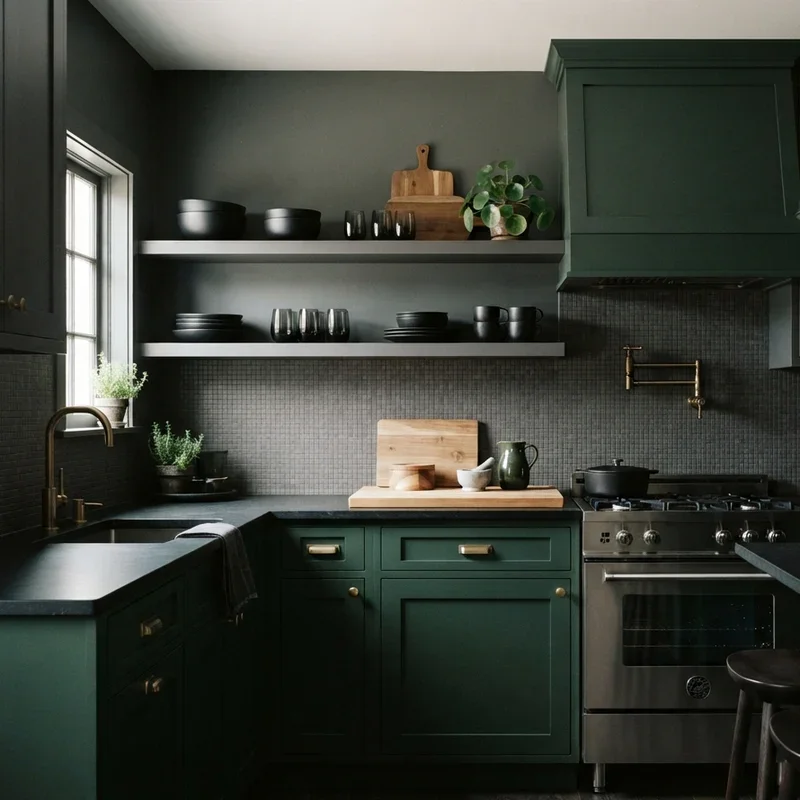
5. Mint Green Accents in Gray Modern Kitchen
Mint green accents in a gray modern kitchen introduce the lightest, freshest green tones through small appliances, ceramic containers, tea towels, a stand mixer, bar stools, or a single painted accent cabinet within an otherwise fully gray kitchen, the mint touches adding youthful energy without committing to green as a permanent major color presence. Mint accents in gray kitchens work like squeezing a drop of lime into a glass of sparkling water where the tiny green addition transforms the entire drinking experience from plain to refreshing through minimal intervention, the restrained mint touches achieving similar atmospheric transformation within the neutral gray kitchen environment. Choose three to five mint-colored accessories preventing the accents from feeling scattered or random. Coordinate all mint items within the same specific shade ensuring cohesion between the accent pieces rather than introducing multiple green variations that fragment the intended color story.
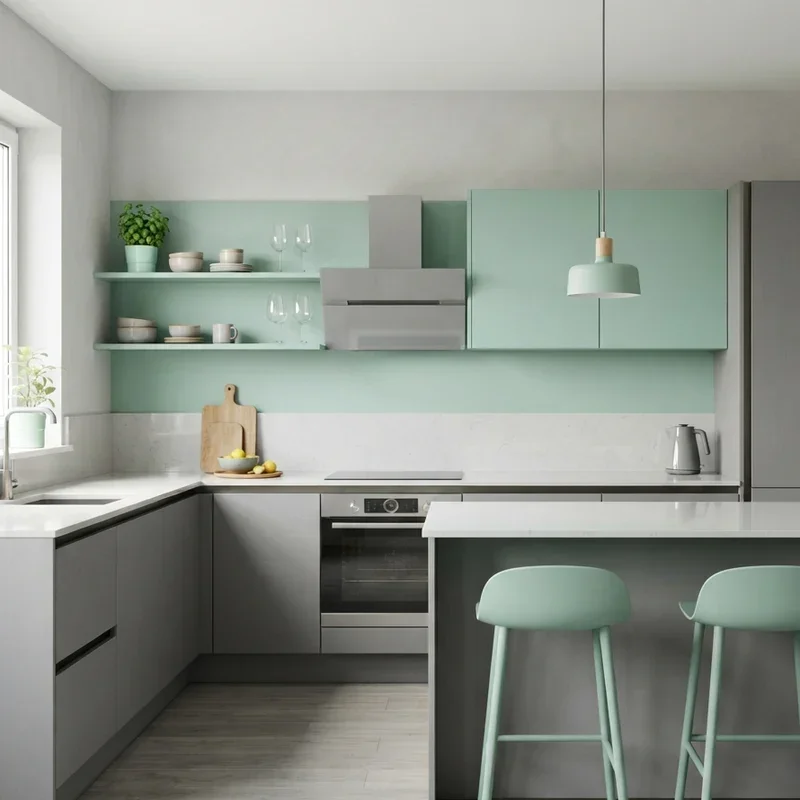
6. Green Subway Tile with Gray Grout Lines
Green subway tile with gray grout lines covers the kitchen backsplash with glazed green ceramic subway tiles using dark gray or charcoal grout that emphasizes the individual tile grid pattern, creating a graphic quality where each green rectangle becomes a defined cell within a visible gray framework that adds geometric structure to the organic green surface. Green tiles with gray grout work like framing every individual tile in its own gray picture frame, the visible lines transforming a flat color surface into a structured grid pattern that adds architectural precision to what would otherwise read as a simple green wall without the graphic definition grout provides. Choose a grout shade two to three tones darker than the tile for clearly visible grid definition. Select glazed green tiles with natural color variation across the batch creating organic tonal differences between individual tiles that handmade ceramics naturally display across production runs.
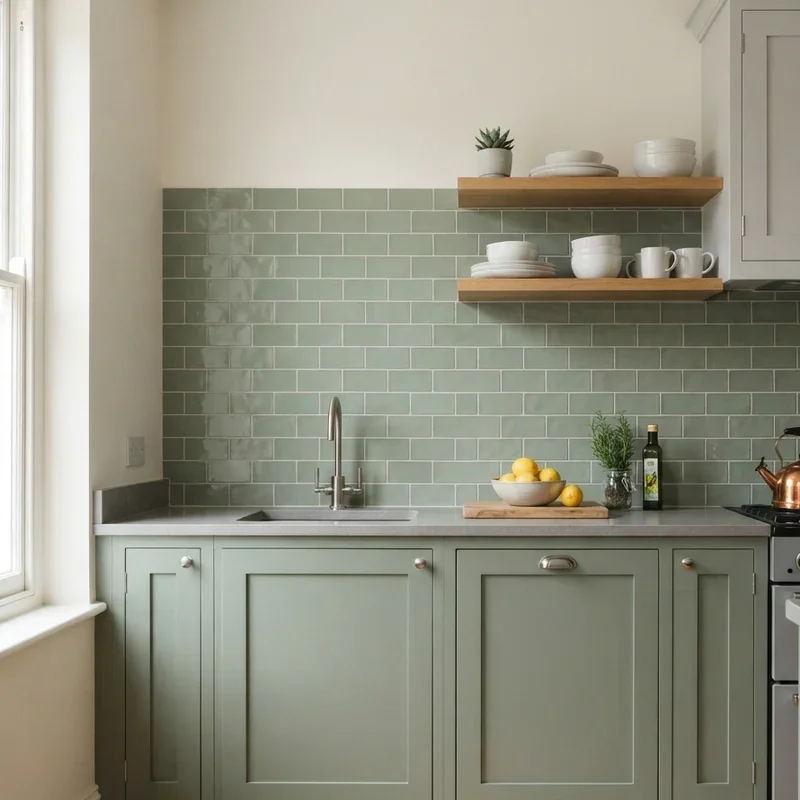
7. Gray Concrete Counters with Green Island
Gray concrete counters with a green island install poured or precast concrete countertops in natural gray across all perimeter cabinets, then paint or finish the kitchen island in a contrasting green creating a focal point where the organic color anchors the room's center while the industrial gray surfaces define the surrounding work zones. Concrete and green island combinations work like placing a garden bed in the middle of a minimalist courtyard where the green center draws every eye inward while the gray perimeter provides the architectural context that makes the green focal point feel intentionally positioned rather than randomly placed. Seal concrete counters thoroughly preventing staining from kitchen spills and acidic food contact. Choose a green island shade that complements the gray concrete's specific undertone, matching cool green tones with blue-gray concrete and warm green tones with taupe-gray concrete surfaces.
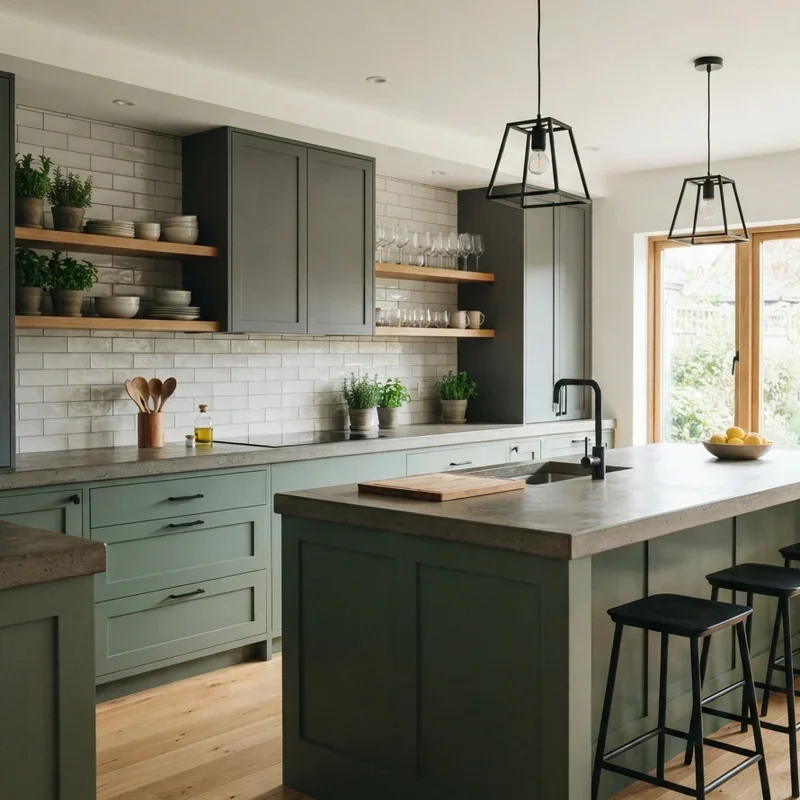
8. Olive Green and Warm Gray Farmhouse Kitchen
An olive green and warm gray farmhouse kitchen combines earthy olive-toned green cabinets with warm gray walls, natural wood countertops, and vintage-inspired hardware creating a rustic kitchen that feels rooted in agricultural heritage while maintaining the sophistication that contemporary farmhouse design demands from modern interpretations of traditional rural aesthetics. Olive and warm gray kitchens work like dressing your farmhouse kitchen in the actual colors of the surrounding countryside where olive trees, stone walls, and overcast autumn skies provide the exact palette this combination replicates within the domestic kitchen environment with genuine regional authenticity. Choose warm grays with brown or taupe undertones avoiding blue-toned grays that conflict with olive green's warm base. Add natural wood floating shelves, a butcher block island top, or exposed ceiling beams introducing the third material element that connects green and gray through the organic warmth of timber.
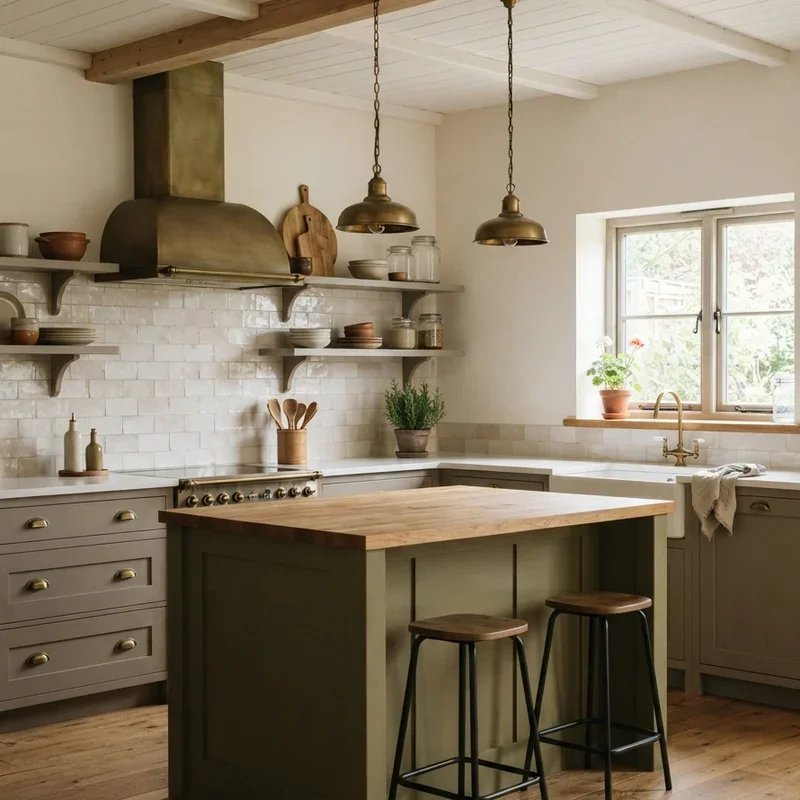
9. Green Open Shelving Against Gray Walls
Green open shelving against gray walls mounts painted green wooden shelves on gray-painted kitchen walls, the colored shelving creating horizontal bands of organic warmth across the neutral backdrop while providing functional storage and display space for curated kitchen items that add additional color and texture to the two-tone wall composition. Green shelves on gray walls work like drawing horizontal green lines across a gray canvas where each shelf band introduces warmth at a specific height, the layered stripes creating visual rhythm that solid green or solid gray walls achieve in uniform color but sacrifice in the dynamic, banded visual energy that contrasting shelf colors produce. Paint shelf brackets in matching green creating cohesive color commitment across the entire shelf installation. Style shelves with a mix of functional kitchen items and decorative objects creating curated displays that add visual personality above and beyond the color contribution the green shelving already provides.
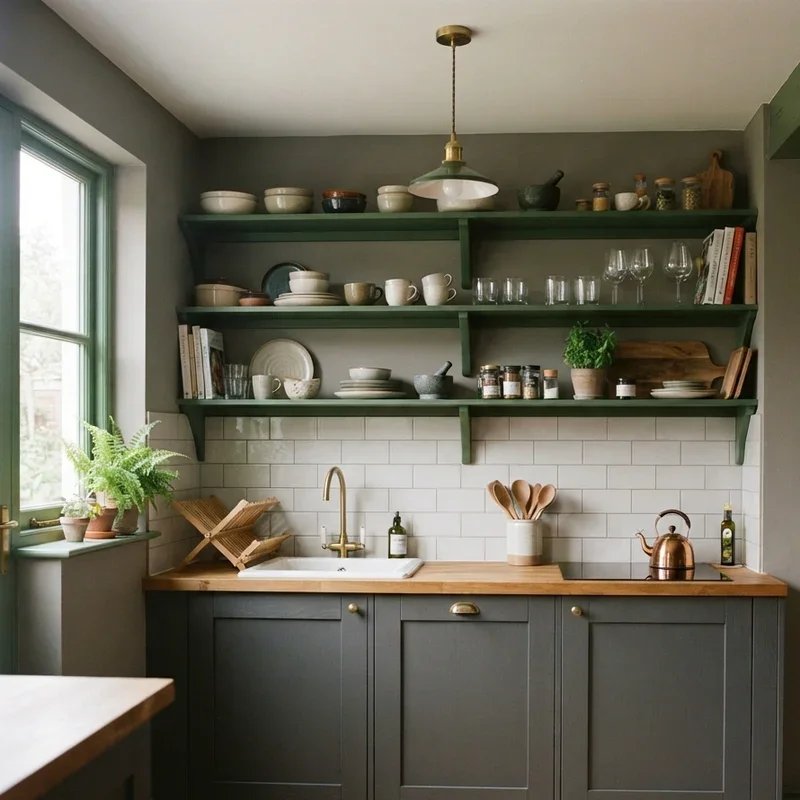
10. Gray Floor Tile with Green Cabinet Base
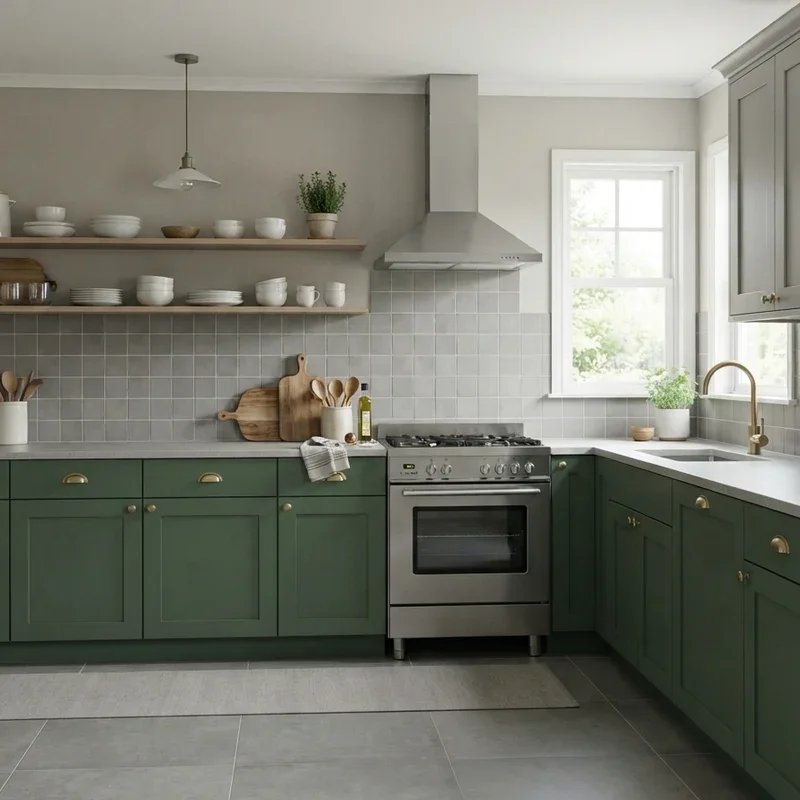
Gray floor tile with green cabinet base installs large format gray porcelain or natural stone floor tiles beneath green-painted lower cabinets, the ground-level color combination creating a foundation where the gray floor anchors the room structurally while the green cabinet base rises from it like vegetation growing from stone-colored earth. Gray floors beneath green cabinets work like establishing geological layers inside your kitchen where the mineral gray base supports the organic green growth above it, the natural material metaphor creating a color relationship that feels intuitively correct because it mirrors the actual relationship between stone and vegetation in every natural landscape. Choose large format floor tiles in matte finishes reducing grout lines and creating seamless surface expanses. Select gray tones that complement rather than compete with the green cabinet shade, testing physical samples together under your kitchen's specific lighting conditions before committing to final material purchases.
11. Emerald Green Pendant Lights in Gray Kitchen
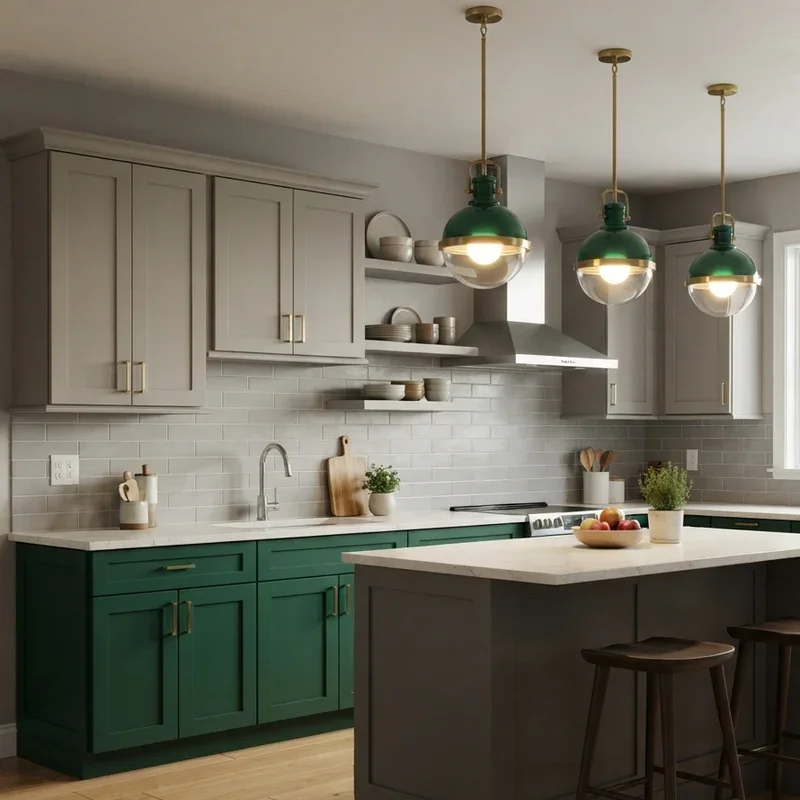
Emerald green pendant lights in a gray kitchen suspend two or three bold emerald green pendant light fixtures above the kitchen island or peninsula, introducing concentrated jewel-toned color through overhead focal points that draw eyes upward while casting warm illumination downward across the gray surfaces below creating vertical visual energy. Green pendants in gray kitchens work like hanging emerald gemstones from your ceiling where the precious green color occupies the room's most elevated position communicating importance and luxury through both its jewel-toned shade and its prominent overhead placement commanding attention from every viewpoint. Choose opaque metal or ceramic pendant shades in emerald green for the strongest color impact. Select pendant sizes proportional to your island's dimensions, hanging fixtures approximately 75 centimeters above the counter surface for optimal task illumination and visual balance.
12. Green Herb Wall in Gray Kitchen Design
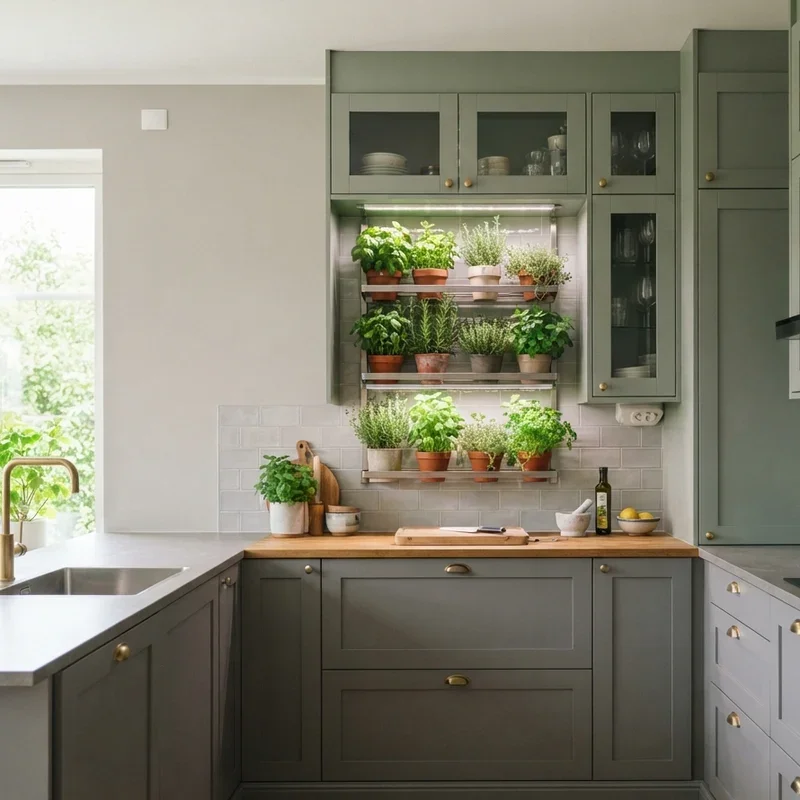
A green herb wall in a gray kitchen design installs a vertical herb garden using wall-mounted planters, pocket planters, or a dedicated shelf system growing fresh basil, rosemary, thyme, mint, and parsley against a gray kitchen wall, introducing living green through functional plants that provide both color and immediate culinary utility. Living herb walls work like growing your color scheme directly from the wall surface where the green accent is literally alive, photosynthesizing, and producing ingredients you harvest during cooking, the functional beauty adding a dimension that painted surfaces and decorative accessories cannot replicate regardless of their visual accuracy. Choose self-watering planter systems reducing maintenance demands that wall-mounted herbs require for survival. Position the herb wall near a window receiving adequate natural light, as most culinary herbs require at least six hours of daily sunlight maintaining healthy growth and productive leaf production indoors.
13. Green and Gray Patterned Floor Tile Kitchen
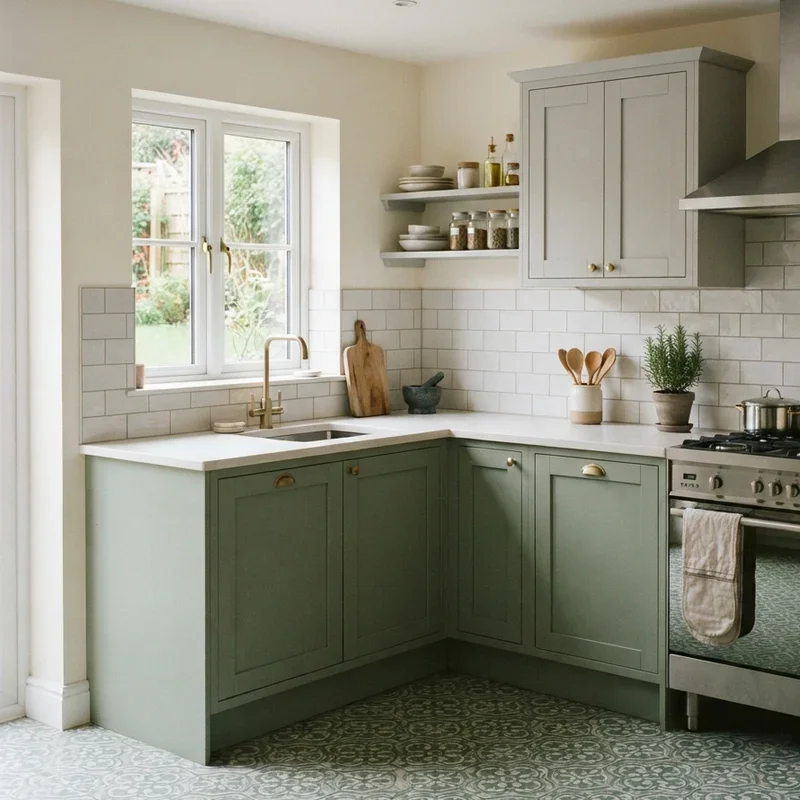
A green and gray patterned floor tile kitchen installs encaustic, cement, or porcelain tiles featuring decorative patterns combining green and gray tones in geometric, floral, or Moroccan-inspired designs that establish the two-tone color scheme from the ground level upward, the patterned floor becoming the kitchen's primary design statement around which all other elements coordinate. Patterned green and gray floors work like laying a decorative carpet permanently into your kitchen foundation where the built-in pattern eliminates the need for additional decorative complexity above because the floor itself carries sufficient visual interest to anchor the entire room's aesthetic identity confidently. Choose patterns with balanced green and gray distribution rather than predominantly one-color designs. Keep cabinets, walls, and countertops in solid, understated finishes allowing the patterned floor to command primary visual attention without competing with busy surfaces above creating overwhelming visual density.
14. Matte Green Hardware on Gray Cabinetry
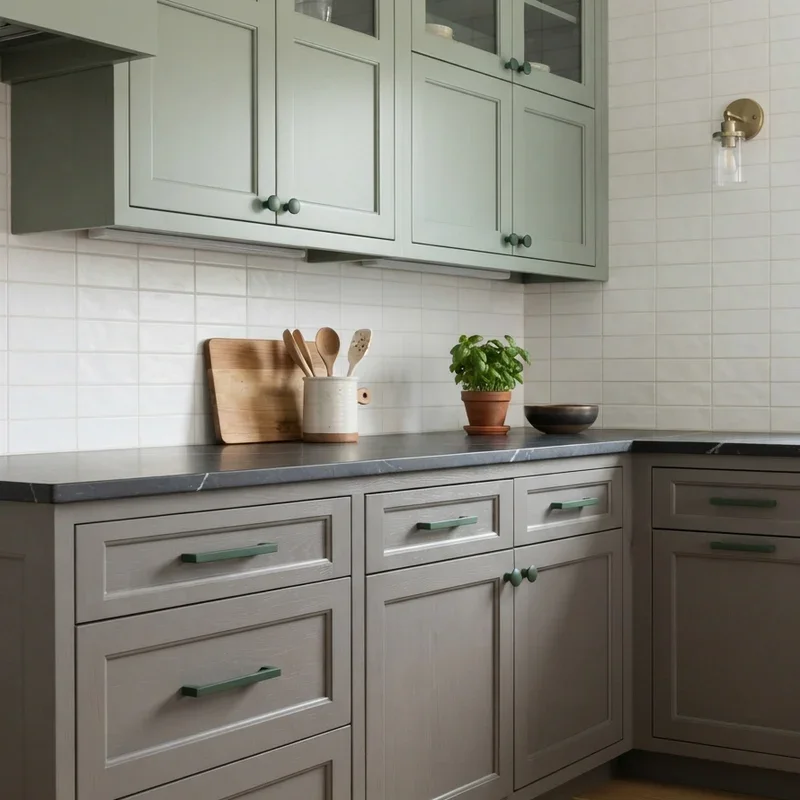
Matte green hardware on gray cabinetry replaces standard metallic cabinet handles and knobs with ceramic, painted metal, or powder-coated pulls finished in matte sage, forest, or olive green, introducing the accent color through the smallest possible design element that gets touched dozens of times daily during regular kitchen use. Green hardware on gray cabinets works like adding tiny green jewelry pieces to a gray outfit where each small accent contributes to a collective impression far larger than any individual handle suggests alone, the accumulated effect of twenty or thirty green pulls creating a cohesive color story through repetition across the entire cabinet landscape. Choose a single green shade across all hardware maintaining absolute consistency. Select pulls and knobs sized proportionally to cabinet door dimensions, as oversized hardware overwhelms small doors while undersized pulls disappear visually on large cabinet surfaces.
15. Green Window Trim Framing Gray Kitchen Walls
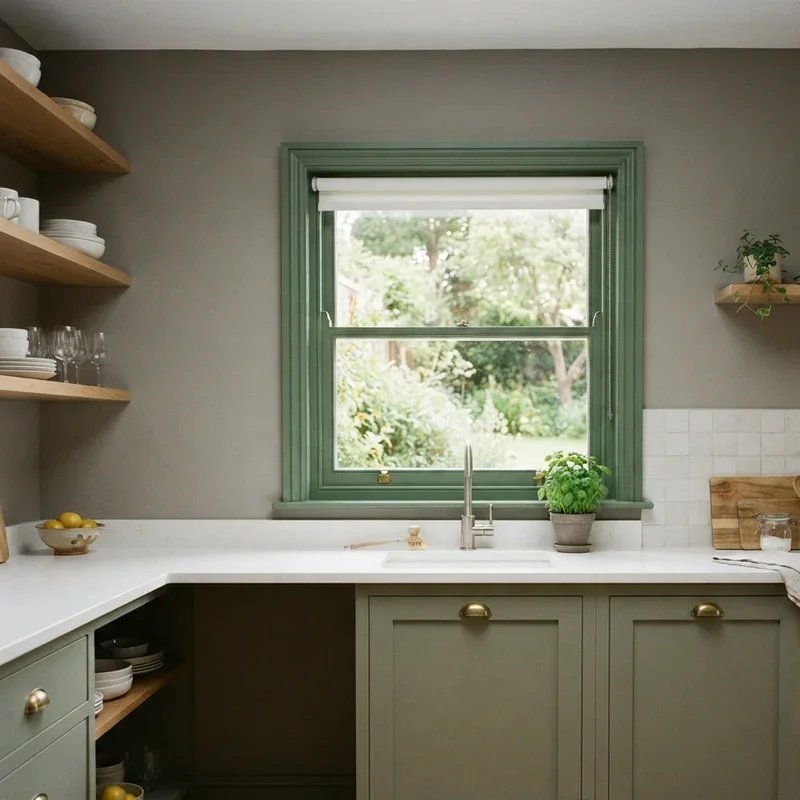
Green window trim framing gray kitchen walls paints the window frames, casings, and sills in a fresh green tone against surrounding gray walls, creating a natural frame effect where the green-bordered windows become individual design features that draw attention toward the natural light and exterior views beyond while adding architectural color to the room's most illuminated zones. Green window trim on gray walls works like highlighting your kitchen's best natural feature with a colored picture frame where the green border says look here at the light, the view, the connection to the outdoors that makes kitchens feel alive and connected to the world beyond their functional interior boundaries. Choose a green tone visible enough to contrast clearly against the surrounding gray wall surfaces. Apply green paint precisely along trim edges using painter's tape for clean lines, the crisp border between green trim and gray wall creating the defined contrast that makes architectural color blocking visually effective.
Conclusion
Green and gray kitchens achieve timeless style because both colors exist naturally in every landscape on earth, the organic pairing feeling inherently correct to human eyes that evolved recognizing green vegetation against gray stone, overcast skies, and mineral surfaces throughout millions of years of visual environmental processing. From sage cabinets with gray countertops to emerald pendant lights and living herb walls, these fifteen ideas prove that green and gray combine into kitchen designs that feel simultaneously fresh and sophisticated without ever risking the dated appearance that trendier color combinations inevitably develop as design fashions evolve. Choose the green and gray balance matching your kitchen's size, light conditions, and personal style, because this timeless pairing only improves with age.
Read next: 15 Green and Grey Bedroom Ideas for Relaxing Sleep Spaces
Frequently Asked Questions
Q1: What shade of green works best with gray in kitchen design combinations?
A: Sage, olive, and forest green pair most harmoniously with gray across various kitchen design styles.
Q2: Should I use more green or more gray as the dominant color in my kitchen?
A: Use gray as the dominant neutral at seventy percent and green as the accent at thirty percent.
Q3: What countertop material pairs best with green cabinets in a gray kitchen scheme?
A: Gray quartz, concrete, and soapstone countertops complement green cabinetry with beautiful natural stone character.
Q4: Will a green and gray kitchen feel dated after current design trends change?
A: Green and gray reference nature rather than trends, making the combination resistant to dated appearance over time.
Q5: What metal hardware finish coordinates best with green and gray kitchen color palettes?
A: Brushed brass, matte black, and antique bronze hardware complement green and gray kitchens most elegantly.
Stay up to date with our latest ideas!