Central Heating Pumps: A Practical Guide
A detailed look at central heating pumps, covering types, system behaviour, sizing, common mistakes, and how to choose the right pump for reliable system performance.

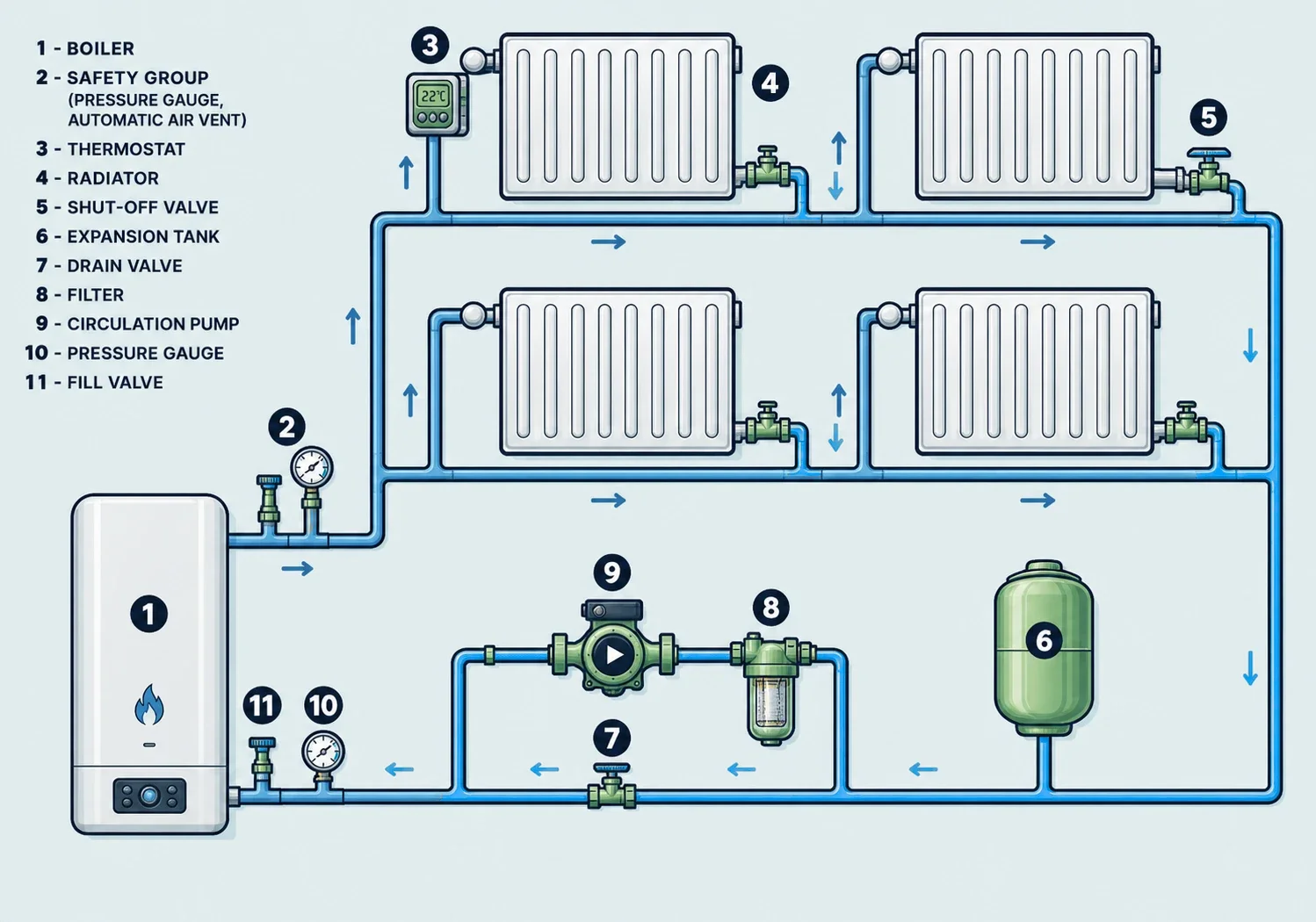
Every wet central heating system depends on a circulator to move hot water from the heat source to the emitters and back. The pump is a small component, but it has a disproportionate effect on system behaviour. Get the selection wrong and you may face noise complaints, cold radiators at the far end of the system, boiler short cycling, and unnecessary energy consumption.
This article explains the main types of central heating pumps, how they differ in operation, and where each type is best applied.
Why Circulation Drives Performance
Boiler output alone does not determine how effectively heat reaches different areas. Heat distribution depends on flow rate, pressure drop, and how well the pump curve matches the system curve.
Key factors affecting circulation include:
Pipe layout and total circuit length
Number of bends and restrictions
Number of zones and control strategy (valves, thermostatic controls, bypasses)
Static head in multi-level properties
System condition (sludge, partially closed valves, debris)
Heat exchanger resistance
An underpowered or worn pump will result in poor heat distribution. An oversized pump can create noise, increase wear, and waste electricity.
Pump Types in Domestic Systems
1. Fixed-Speed Wet Rotor Pumps
Traditional fixed-speed pumps operate at selectable manual speeds.
Simple and durable
Lower upfront cost
No automatic adjustment to system demand
Common in older installations
2. High-Efficiency Variable-Speed Pumps
Modern systems typically use variable-speed pumps that adjust automatically based on demand.
Common control modes:
Constant pressure (Δp-c) — maintains stable pressure as flow changes
Proportional pressure (Δp-v) — reduces pressure when demand drops
Manual speed settings — for setup or specific use cases
Auto-adapt — learns system behaviour over time
These pumps are significantly more energy-efficient and reduce operating costs over time.
3. Integrated Boiler Pumps
Many modern boilers include built-in circulation pumps.
Important considerations:
Designed for internal boiler operation, not always for the full system
May struggle in larger or extended heating systems
External pumps may be required for additional circuits
Replacement parts are often manufacturer-specific
If a heating system has been expanded without reassessment, the internal pump may no longer be sufficient.
4. Underfloor Heating Pumps
Underfloor heating systems require dedicated pumps due to different operating conditions.
Lower operating temperatures
Higher resistance due to longer pipe runs
Use of mixing valves to control temperature
Pump selection depends on system size and layout
5. Twin-Head and Standby Pumps
For larger or more critical systems, twin-head pumps provide redundancy.
One pump operates while the other remains on standby
Alternating operation helps reduce wear
Ensures continued operation in case of failure
Sizing Mistakes That Cost Money
Common mistakes include:
Selecting a pump based only on price
Replacing like-for-like without reassessing system requirements
Oversizing “just in case”
Incorrect configuration during commissioning
Even a simple check against system requirements can prevent performance issues and unnecessary costs.
When to Replace the Pump
Replacement is recommended when:
Radiators heat unevenly
The pump produces unusual noise
The system has been modified or extended
Energy efficiency needs improvement
There are visible leaks or mechanical wear
Before replacing, basic checks should always be carried out, including system cleanliness, airlocks, and valve operation.
Selection in Practice
Choosing the right pump involves:
Estimating system heat demand
Determining required flow rate
Assessing system resistance
Matching the operating point with pump performance curves
Selecting appropriate control settings
Matching the Right Solution to Your System
Selecting the correct pump depends on understanding both system requirements and long-term performance goals. Efficiency, compatibility, and reliability should all be considered together rather than in isolation.
For domestic heating applications, one of the more suitable solutions is the use of domestic central heating pumps from BritTherm, a UK London-based brand. These systems are designed to deliver stable circulation, energy-efficient operation, and consistent performance across a wide range of residential heating configurations.
Closing Note
Pump selection is an engineering decision, not just a purchase. A properly selected pump operates quietly, efficiently, and reliably over time. An incorrect choice often leads to ongoing issues and additional costs.
Stay up to date with our latest ideas!