Camping Generators: What to Look for Before You Buy
Learn what to look for before buying a camping generator, including power output, fuel type, portability, noise levels, runtime, safety, and key features.

Camping has recovered from pandemic slumps and lockdowns, generating over £12 billion for the UK economy. While tent camping still leads in overall volume, there’s been a considerable shift to longer trips with motorhomes and caravans, now equipped with all the comfort and convenience extras of home.
Powering appliances and devices while on the road is the main task of reliable camping generators. These relatively simple and affordable devices ensure basic vehicle amenities such as heating, cooling and plumbing work hassle-free, while also topping up starter and secondary batteries and stepping in with extra output when needed.
Basics of Generators for Camping

Small, compact and portable, a camping generator is the ultimate off-grid power source. It provides independent electricity while camping, tailgating or living off-grid. Unlike larger stationary home or industrial generators, camping variants are designed to fit easily in campervans, caravans, and motorhomes, start instantly, and, with newer inverter types, run quietly in the background.
The device powers everything you need while on the road - from mobile phones, TVs and laptops, to ovens, air conditioners, boilers and smaller kitchen appliances. Possibly the hardest decision for first-time campers and anyone transitioning to caravans or RVs, is choosing generators suited to your camping needs, and the overall power output to ensure an uninterrupted power supply.
Common Camping Generator Types
Dual Fuel
These burn petrol or propane (LPG) to power an internal combustion engine to turn built-in alternators and generate an electric current. They provide easy switching between fuel types (depending on what is more affordable or convenient); decent power output and long run times (specifically with heating and cooking); clean operation and easy cylinder storage when switched to propane; generally low maintenance needs and dependable performance in a variety of temperatures and weather.
While affordable, dual fuel generators are slowly being phased out in many designated UK campsites due to changing guidelines in noise and emissions levels, as well as safety requirements, including heightened fire risks.
Inverter Generators
Inverter generators also use petrol or propane as a fuel source, but include advanced rectifiers and inverters to throttle engine output according to power draw. This produces cleaner electricity with more stable voltage - important when charging sensitive electronics such as phones and computers, considerably reduces noise levels (to those tolerated in campsites) and ensures lower fuel use and higher efficiency. Despite somewhat higher purchase prices and maintenance needs, these are outpacing dual-fuel generators for camping and outdoor usage.
Power Stations/ Portable Solar Generators
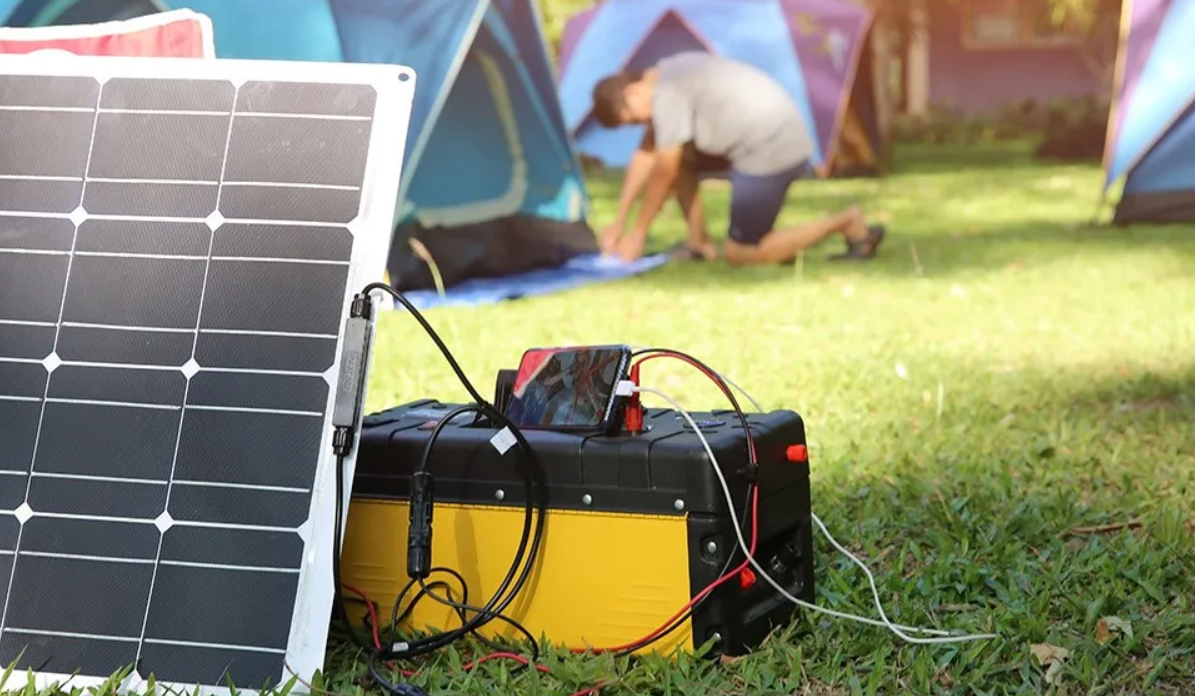
Essentially rechargeable, high-output lithium battery packs with built-in charge controllers and inverters, power generators store usable power generated from connected solar panels, or AC power drawn from a mains connection. With no burning of fuel, the generators are emission and virtually noise-free, making them safe for both indoor and outdoor use. The absence of spark plugs, carburettors or fuel lines also makes them much safer, low-maintenance power sources, combining the safe, clean energy and quiet operation of inverter generators with the long run times, charging versatility and high output of larger dual-fuel variants.
Key Uses
Cooling and heating: Power portable fans, heaters, boilers, rooftop air conditioners.
Plumbing: Ensure clean water and hygienic wastewater removal with generators supplying power for pumps, actuators and sensors.
Charging personal electronics: Charge phones, tablets, laptops, drones, cameras and other devices.
Run power-hungry caravan and motorhome appliances: Power fridges, freezers, coolers, ovens, microwaves, hairdryers, washing machines, coffee machines, blenders and more.
Campsite and vehicle lighting: Run LED string lights, ceiling and downlights, reading lights, lanterns, light bars, flood and work lights.
Camping entertainment: Run 12V TVs, DVD players, projectors, satellite dishes, routers, soundbars, Bluetooth speakers and Hi-Fi systems.
Charge batteries: Top up secondary batteries in overcast or rainy weather, and depleted starter batteries.
Main Buying Considerations

Power Output
Manufacturers list generators with three power figures: starting watts or the brief burst of power generators can muster to run appliances such as fridges and air conditioners; rated or continuous power over prolonged periods; and maximum wattage the device can generate for moderate periods (generally 30 minutes) before overload protection kicks in. Different generator types fare differently in this respect.
Choose solar generators for high starting watts when powering on air conditioners or fridges; dual generators for stable supply to general camping appliances, and inverter generators for electronics. Solar generators have starting power ratings averaging 4000W, and almost double that in units with advanced inverters, providing ample power when starting up multiple power-hungry appliances. However, their lower continuous output (2000W to 3000W) compared to dual fuel and inverter generators limits their versatility.
Dual fuel generators vary in output depending on the fuel type. Powering dual-fuel generators with petrol yields better results than sustained use with devices running solely on propane, with 10 to 15% higher numbers for both starting and continuous wattage. Most units seen in camping average between 3000 and 4500W of continuous power, and slightly higher numbers during power surges.
Inverter generators produce up to 20 to 30% more starting watts than their average rated continuous output of 3000 to 4000W. To ensure which generator makes more sense, calculate power needs in the appliances and devices you most commonly use, and allow for 20 to 25% additional output to prevent equipment damage and ensure consistent supply.
Noise Levels
Aim for generators that operate below 60dB when measured at a distance of 50 feet. Use in designated campsites is often limited to the daytime only, with strict quiet windows between 11 PM and 7 AM for most UK campsites. This rules out most large petrol-powered dual fuel generators, with most buyers gravitating towards much quieter inverter or dead-silent solar generators.
Size, Weight and Portability
Size and weight are often tied to power output. Generally, the more powerful the generator, the larger and heavier it will be. Smaller 1000W units weigh a manageable 10 kilos, midsized 3000W camping generators weigh between 15 and 25 kilos, and larger, dual fuel types in higher outputs can verge on 50 kilos or more. Still, almost all are compact enough to fit in car boots, or designated compartments in caravans and motorhomes.
For easier portability in and around the campsite, look for features such as built-in all-terrain wheels and rugged telescoping handles made of moulded and grippy plastics.
Control Panels, Inputs and Safety Features
Lastly, for safe and simplified operation, consider user-friendly control panels displaying basic parameters such as running hours and voltage and fuel levels; mains, solar and DC inputs when topping up from a mains supply or charging secondary batteries; gas and fuel tanks and inlets in dual fuel types, standard pin or blue 16A plugs and USB ports when connecting devices and appliances, and the full range of safety and emergency shut-off features (stop buttons, circuit breakers, spark arrestors, etc.) to ensure maximum protection during overheating, low oil levels and power surges.
Stay up to date with our latest ideas!